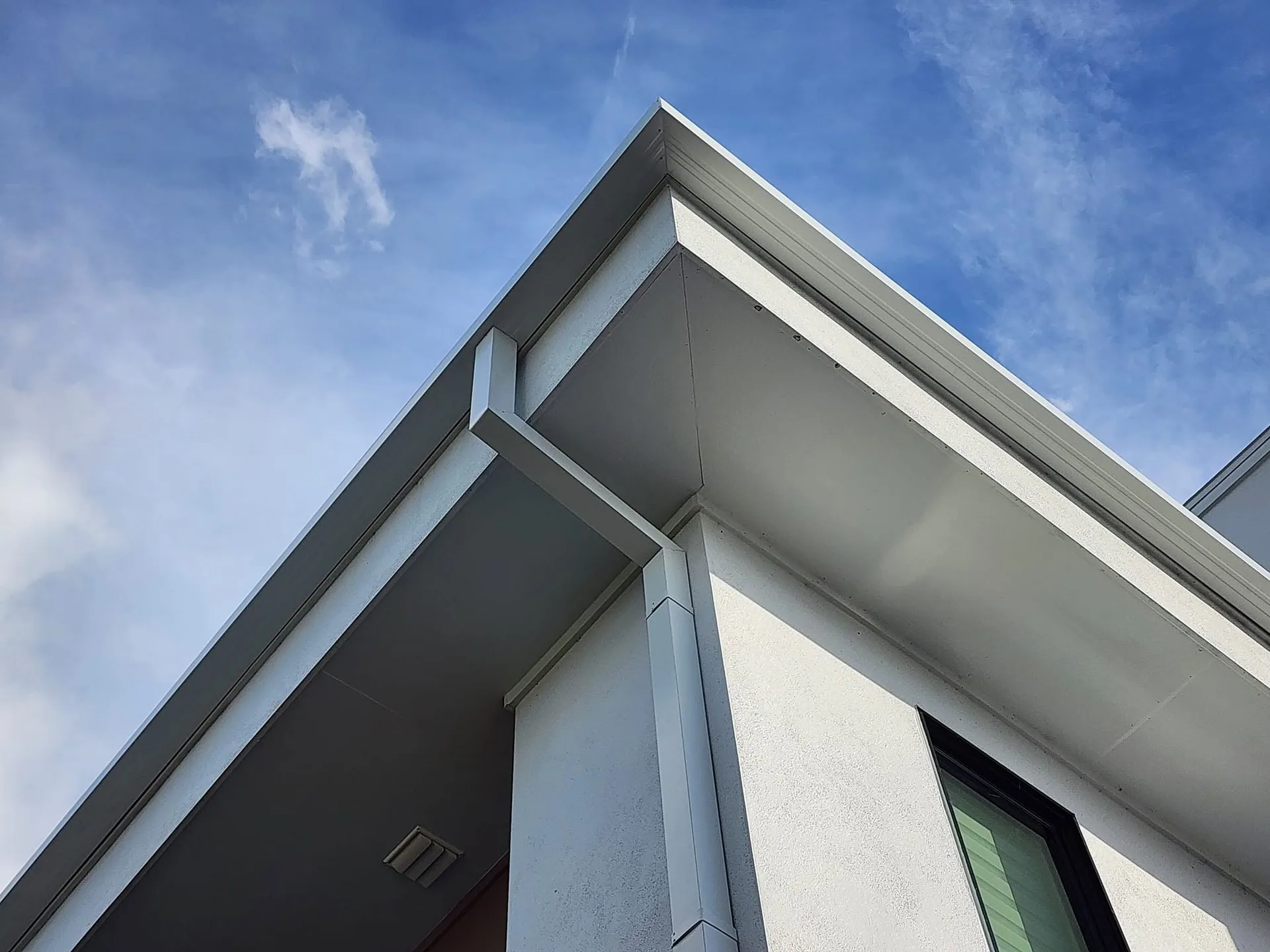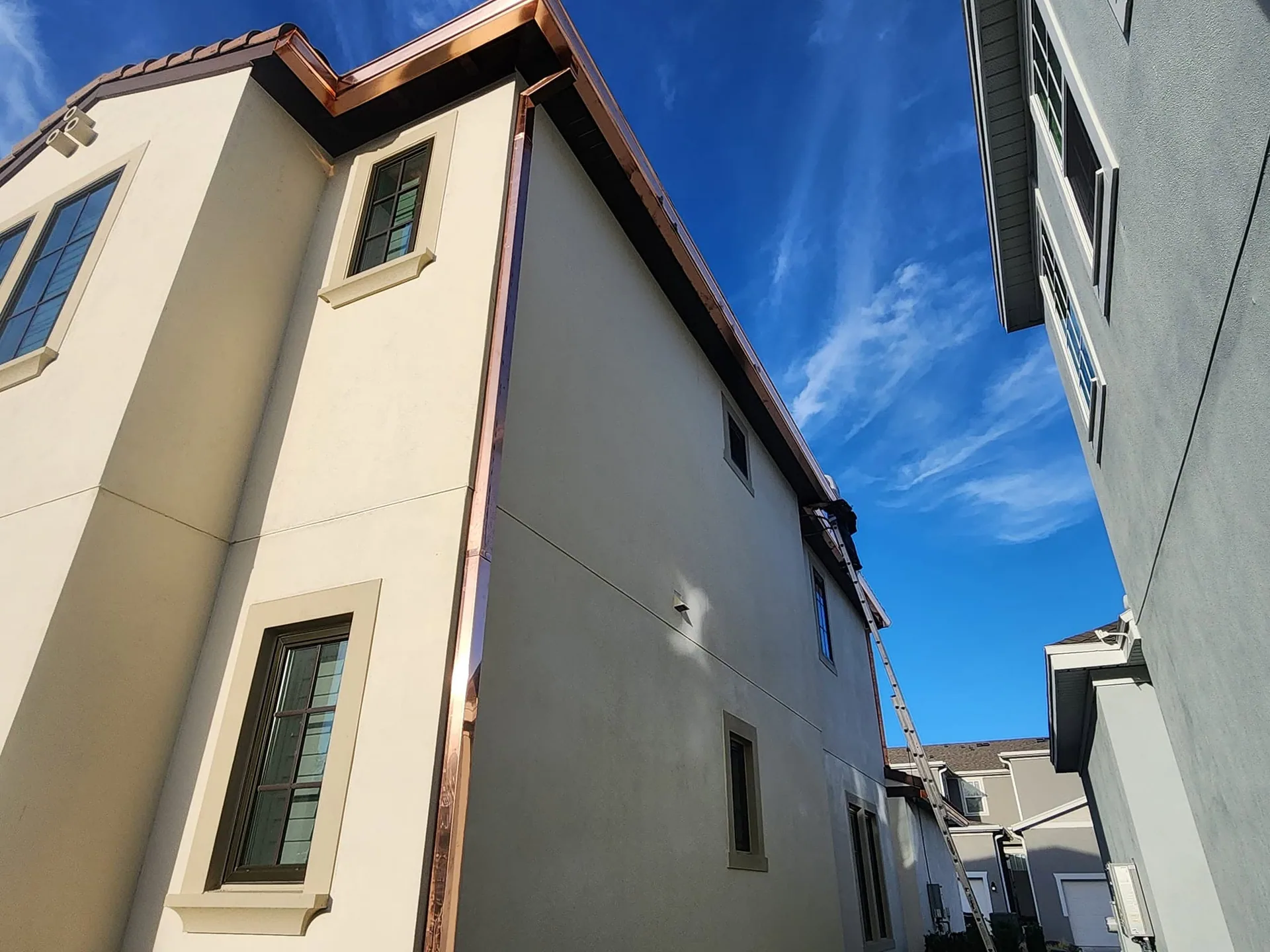
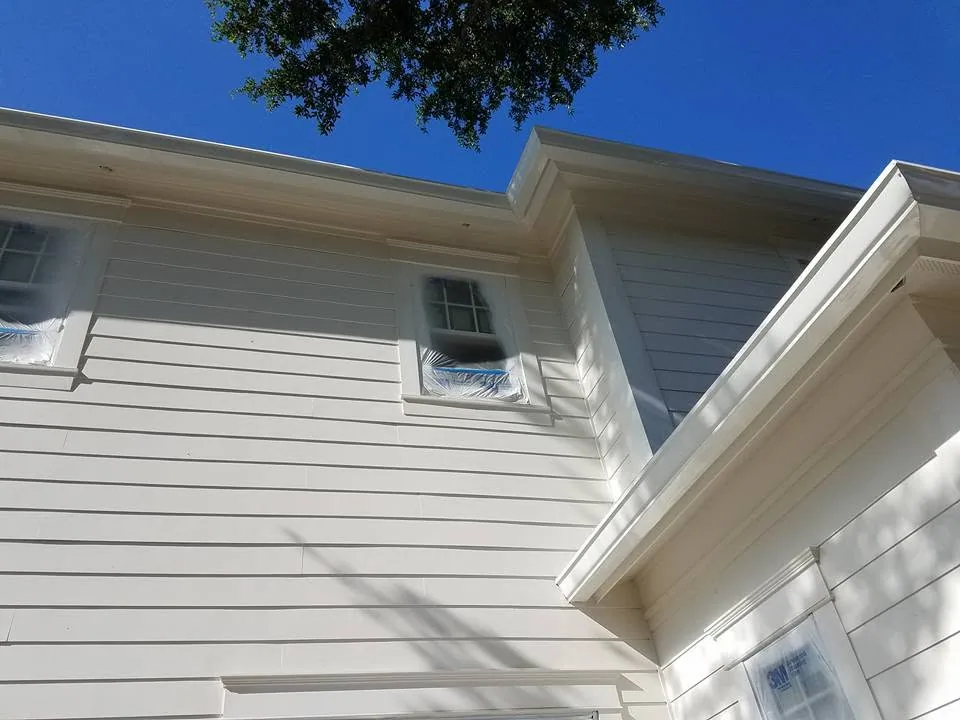
Fascia is easy to overlook. It is the trim board that runs along the edge of the roof, usually painted to match the house and partly hidden behind the gutters. Even so, it carries the weight of the entire gutter system and helps seal the roof edge from the weather.
For homeowners in Sanford, Winter Park, and Maitland, Central Florida’s humidity, heavy summer rain, and strong sun put steady stress on that board. Knowing what to look for can turn a small repair into a quick job instead of a larger roofline project.
Why Fascia Matters to Your Gutters
Gutters are fastened to the fascia, so the board needs to stay solid to hold those fasteners securely. When wood fascia rots, warps, or splits, the fasteners can loosen and the gutter can pull away from the roofline.
That is often the hidden reason behind a gutter that keeps leaking or sagging no matter how many times it is resealed or rehung. The gutter itself may be fine. The surface it is attached to is not.
Warning Signs You Can Spot From the Ground
You do not need to climb a ladder to notice many early signs of fascia trouble. From the yard, look for:
- Peeling or bubbling paint along the roof edge
- Dark stains or discoloration on the trim board
- A gutter that has pulled away from the roofline or dips in one section
- Gaps between the fascia and the roof edge or soffit
- Boards that look warped, cracked, or uneven
Photos taken from a safe spot on the ground can help a contractor understand what you are seeing before a visit.
Soft Spots and Pest Damage
Rot often starts where water reaches the wood repeatedly, such as behind an overflowing gutter or at a leaking corner. Over time the board softens, and the damage may extend farther than the visible surface suggests.
Damaged or rotted wood can also create openings for pests. Woodpecker damage is a common issue on older Central Florida homes. Any hole or opening in the fascia line is worth having inspected, because it can let water and animals into the roof edge.
Why Waiting Can Cost More
A fascia problem rarely stays small. Water that gets past a failing board can reach the roof sheathing and, eventually, interior ceilings. Repairing fascia early generally costs far less than waiting until the roof deck itself is compromised.
Homes in established neighborhoods sometimes have original wood fascia hidden behind aluminum trim that was added years ago to cover early rot. The trim may look fine while the wood behind it continues to deteriorate.
Repair, Replace, or Convert
The right fix depends on how far the damage goes. A proper repair starts with a look at the full roofline, including the soffit and the gutter attachment points, before any boards come down.
Damaged wood is removed and replaced with a properly sized, sealed board. Some homeowners choose to convert to an aluminum fascia wrap for a lower-maintenance finish going forward. Once the new fascia is secure, the gutters and downspouts are reattached so the system works as one.
Storm Solutions provides wood fascia repair and replacement along with soffit and fascia replacement for homes across Central Florida.
Have Your Roofline Checked
If your gutters keep leaking or pulling away, the fascia behind them deserves a closer look. Catching rot early protects your roof edge, your gutters, and your home’s curb appeal.
Storm Solutions has served Central Florida since 2006, providing gutter installation, repair, and soffit and fascia services. Call (407) 832-5183 to schedule a fascia inspection for your home.